Traditional lead work in Yorkhand-dressed for a lasting sealand a proper finish.
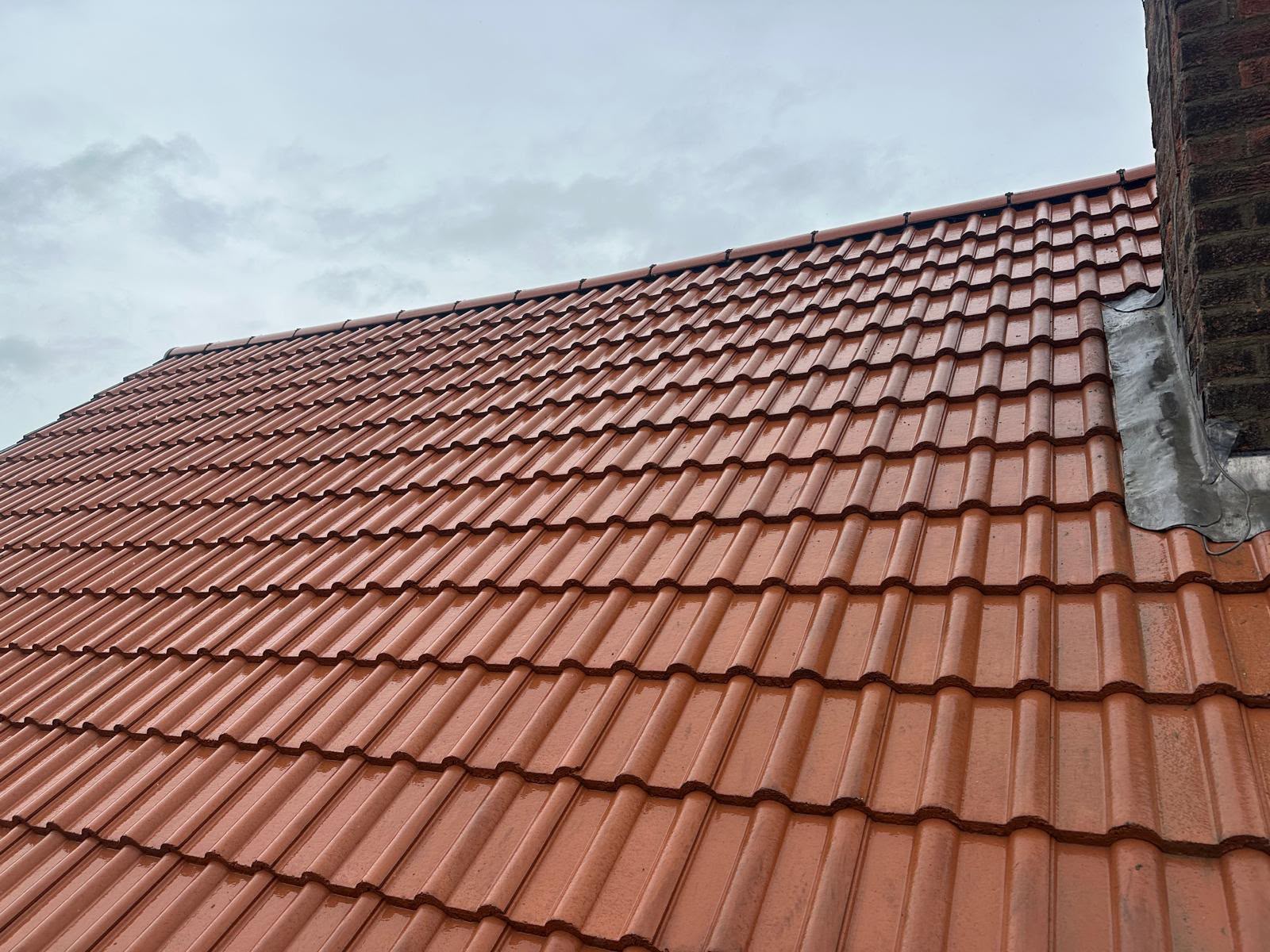
Chimney flashings, roof valleys, dormer aprons and pitched abutments, hand-dressed in code 4 and code 5 lead to Lead Sheet Association standards. Not silicone, not felt, not painted-on 'flashband'.
Lead work is the traditional craft of forming milled lead sheet to seal every abutment, valley, joint and edge on a pitched roof. It's the single most durable weathering material used in UK roofing, a well-detailed lead job outlasts most of the tiles around it.
Who it's for
Homeowners with a persistent leak at a chimney or abutment, period-property owners restoring authentic detail, and anyone who's been sold cement fillets or 'flashband' where lead should have been fitted.
When you need it
Any time you're re-roofing, rebuilding a chimney, replacing a dormer, or chasing a leak that returns despite tile repairs. Cement fillets and self-adhesive tapes are always warning signs.
Why it matters
Lead lasts a hundred years. Bitumen tape lasts three. The difference in fitting cost is measured in a few hundred pounds; the difference in outcome is measured in decades and interior redecorations avoided.
What happens if it's ignored
Small problems don't stay small.
A roof issue left alone compounds quickly. Water tracks, timber rots, and repair scope escalates by season. Here's what we see when a customer waits.
Cement fillets cracking after two winters
Fillets of sand-cement mortar at abutments crack the moment the tile and stack move differently in the cold, which they do every year. Water is then straight into the flue and down the chimney breast.
Flashband and painted-on seals
Self-adhesive bitumen tape (Flashband) is a temporary make-safe, not a repair. Fitted in place of proper lead it lifts within 2–3 winters and starts hiding the leak rather than sealing it.
Old lead cracked from thermal fatigue
Lead expands and contracts with temperature, a big sheet needs to be broken into short bays with expansion joints, or it fatigue-cracks within 15–20 years. Overlong bays are the classic Victorian-and-later mistake.
Undersized codes on exposed detail
Code 3 lead was still being fitted on chimney flashings in the 1980s where code 4 or 5 belonged. Undersized lead punctures, tears and blows off, always in the exposed coastal locations.
Our process
From first call to final tidy-up.
01
Survey and detail specification
We measure the abutment, valley or joint, check the exposure and specify the correct code, bay length and detail per the LSA Manual.
02
Fixed-price written quote
written fixed-price quote within 6 hours, set out the lead code, dimensions, dressing method, fixings and paint if applicable.
03
Chase, dress and fix
Fresh chase cut into masonry where required, minimum 25mm depth. Lead cut to length, hand-dressed with a bossing mallet to match the profile, and lapped with wedges before pointing.
04
Patination oil and finish
Patination oil applied on completion to prevent white lead-carbonate staining on the tiles below, the mark of a proper lead job.
05
10-year guarantee, decades of service
Our 10-year written workmanship guarantee in writing; typical lead service life 60–120 years depending on exposure and code.
Why homeowners pick us
What you actually get.
A century of service life
Correctly specified and fitted milled lead outlasts every alternative, 60 years is a low estimate for exposed detail, and internally protected work reaches 100+.
Fire-safe, weather-proof
Lead is inert, non-combustible and stable across the entire British weather range. It's the correct material at abutments to gas flues and chimneys.
Dressed to LSA standard
Every job to Lead Sheet Association Rolled Lead Sheet Manual specification, the industry benchmark for durability and appearance.
Cheaper long-term than any alternative
The £300 extra to fit lead instead of a cement fillet saves £4,000 of interior redecoration over the following two decades.
Patinated to prevent staining
Patination oil applied on completion means no white run-off marks on the tiles below, the mark of a proper lead craftsman, not a fitter.
Traditional craft, in-house
Lead work isn't sub-contracted. Our own roofers dress, cut and fix every sheet, the standard is set once and it stays.
The detail
Materials, methods and where they apply.
Lead work covers a wide range of details on any pitched roof. Below is a summary of the main applications and how we approach each.
Two-part flashings on every chimney abutment: soakers under each course of tile on the flanks, and step flashings cut into a fresh chase in the stack. Front apron and back gutter dressed as separate pieces, all in code 4 or code 5 lead depending on exposure.
Roof valleys
Valley linings between two roof pitches are among the highest-load lead applications on a house. We fit valleys in code 5 lead, in short bays (typically 1.5m or less) with laps and clips, undercloak boards where required, and formed edges rather than field cuts. Alternative: preformed GRP or fibre-cement valleys for lower-budget work.
Code 5 lead, long-service standard for exposed valleys
GRP, cost-effective and durable, matched to tile colour
Fibre-cement, traditional look on period pitched roofs
Dormer aprons and side flashings
Dormer roofs meet the main roof at an apron along the front and stepped side flashings along the cheeks. Both dressed in lead, both fitted to the LSA detail. Where the dormer has a lead-covered flat roof, we form the aprons and back gutter as a continuous sequence for a fully sealed junction.
Abutments and pitched-to-vertical joints
Anywhere a pitched roof meets a vertical wall, extensions, single-storey add-ons, coach houses, needs a proper stepped flashing chased into the wall, not tucked behind render or hidden under a fillet. We take it back to bare masonry, chase properly and finish flush.
Lead-covered dormers, bays and canopies
Small flat areas, dormer tops, bay window canopies, porch flat roofs, take a fully lead-covered finish. We fit in short bays with hollow rolls or wood-cored rolls, drips to gutters, and welted edges. It's the traditional Yorkshire detail on many period city-centre properties.
Residential vs commercial
Domestic lead work is nearly always on pitched roof abutments, valleys and dormers. Commercial lead work extends to parapet cappings, mansard flat sections, and heritage restoration, we handle both, matched to spec and priced fixed.
FAQ
Straight answers, no waffle.
How much does lead flashing cost?+
A single chimney flashing (soakers, step flashings, apron and back gutter) typically runs £650–£1,400 including scaffold. Full valleys and dormer aprons are priced by linear meter after survey.
How long does lead last?+
Correctly specified and fitted milled lead has a service life of 60–120 years depending on exposure and code. It outlasts every tile it sits next to, and usually the roof underneath.
Can you replace a cement fillet with proper lead?+
Yes, and we recommend it whenever a cement fillet is failing. We rake out the old mortar, cut a proper chase into the masonry, and dress fresh lead soakers and step flashings, the correct detail from the outset.
Do you use lead-look alternatives?+
Only where the customer specifically asks for it or budget requires. We prefer real milled lead, the alternatives (Ubiflex, EasyLead) work for restricted budgets but don't match milled lead's service life.
Will the lead stain my tiles?+
Not when it's patinated on completion. Fresh lead sheds a white lead-carbonate wash for the first few months of rainfall; patination oil neutralises it. Untreated lead can mark porous tiles beneath, treated lead does not.
Is lead work covered under your guarantee?+
Yes, the full 10-year workmanship guarantee applies to lead work as it does to every other trade we carry out.
Can you match old Yorkshire lead work on period property?+
Yes, hollow rolls, wood-cored rolls, welted drips, traditional patterns and matched patina are all part of what we do on conservation-area and heritage work.
Is lead work an environmental problem?+
Milled lead sheet is close to 100% recyclable and typically manufactured from recycled feedstock. It's one of the lower-embodied-carbon roofing materials over a lifecycle basis.